不知道是不是喝太多水而尿急了,不管怎么样上了桥开始逆风而跑,天气也没那么闷热了,桥上一路上平均大约4/5公里就有水站,每个水站都有足够的运动饮料和白开水,而且还有分冷冻和不冷冻的,派水的志愿工作者也有喊到"this is warm water/ cold water/ 100 plus cold 和 100 plus warm"非常贴心。一直被人超越是很不好受的,到了桥中间还是逆风不停,虽然桥中的水站有面包可是不想吃(分巧克力更好啊~),拿了运动饮料和水继续上路,顺便上个厕所。。。
槟城人真幸运。西北部青山隐隐,绿水迢迢。亚依淡和直落巴巷两个水坝,蓄水池及净水厂各五,六处。在槟城水供机构(Perbadanan Bekalan Air Pulau Pinang)管理和完整配水系统下,让槟城人有足够的水供,还享付全马最低廉的水费。这一切供水系统进程始于1800年英殖民统治时期。开辟槟榔屿的莱特大佐,基于初时岛民凿井取水,有些井水既少又混浊,不适于一般饮用,逐开发了一套供水系统。1804年起,槟榔屿殖民地政府即将部分的山水,经改道和导流的工程,把水引到蓄水池,再经过滤才输送到岛民所居住的地方。
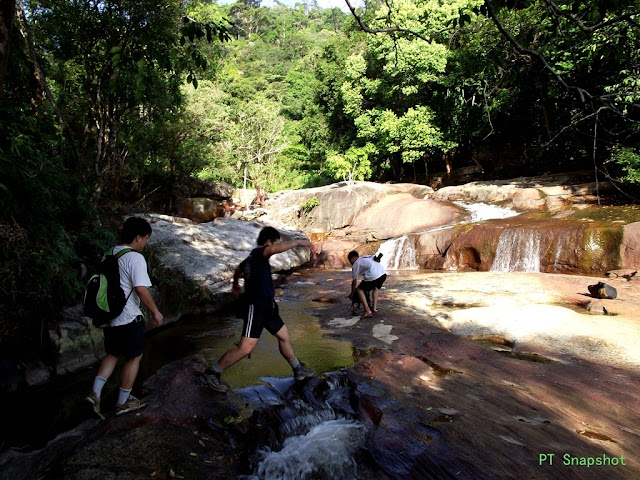
南天门瀑布,趴着拍照
An appreciation of Penang’s history is integral to understanding the importance of heritage. For example, one of the reasons why early mariners stopped at Penang was to replenish their supplies of fresh water. Batu Ferringhi (Foreigners’ Rock) with its waterfall once visible from the sea was one such source for sailing ships to obtain water before and after crossing the Indian Ocean.
热血
Near the current E&O Hotel on the north shore was a later site — known as Sweet Water Bay and depicted in early paintings — the terminus of an aqueduct from the Waterfall behind the present Botanic Gardens. That waterfall and the reservoir at its base are the site of the oldest water works in Malaysia and should be regarded as a heritage site.
历史遗迹
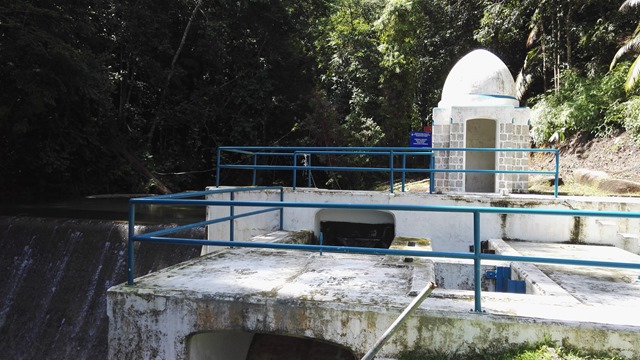
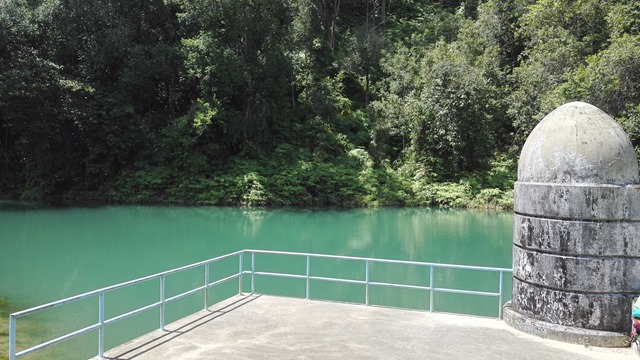
Other early reservoirs and aqueducts also deserve designation as heritage sites. In particular, the picturesque Guillemard Reservoir at Mount Erskine built in 1929 under the supervision of Penang’s first municipal water engineer J.D. Fettes is not only a functioning example of early 20th century engineering but a site of outstanding beauty that was a popular venue for pre-war picnics before it was closed to the public.
山路
The Guillemard Reservoir is part of a public water supply system designed by Fettes that includes a four-mile-long aqueduct built in 1926-1929 winding through the hills above Batu Ferringhi. Fed by three intakes from hillside jungle streams, this historic aqueduct leads to a mile-long tunnel and a 24-inch cast-iron pipeline ending at the Guillemard Reservoir.
古老的水坝
The Guillemard Reservoir and Batu Ferringhi aqueduct were opened on 16th July 1929 by Sir Hugh Clifford, Governor of the Straits Settlements, who named the reservoir after his predecessor Sir Lawrence Guillemard and Lady Guillemard. In commending Fettes for his design and work on the reservoir and aqueduct Governor Clifford noted he had worked for six years without taking leave.* Construction of the new water scheme had been approved during Guillemard’s term in office.
因为摄影而登山
Details of the reservoir and aqueduct were described in full in The Straits Times of 17th July 1929. Built at a cost of $3,700,000 with a capacity of 7 million gallons the reservoir was constructed in two halves so that one half may be in use when the other half is being cleaned. Following the contours of the hills the smallest section of the Batu Ferringhi aqueduct has a gradient of 1 in 500 at the intake end. The largest section beyond the intakes has a gradient of 1 in 1,800. From the reservoir a 27-inch cast-iron pipeline was laid to Pangkor Road and from there a 24-inch pipeline to Pitt Street.
七年后这才走完这条路
Other examples of impressive public water works are the Ayer Itam Reservoir with its prominent art deco clock tower as well as the separate Ayer Itam Dam.
*Note: James Dollery Fettes died on home leave in England in 1931 after delaying his leave for several years. His widow was awarded a gratuity of $15,000 by the Penang Municipal Commissioners in recognition of his “highly meritorious services”. (Straits Times, 21 Feb. 1931; Singapore Free Press & Mercantile Advertiser, 3 Nov. 1931)
By Leslie A.K. James. Photographs from Penang Past and Present 1786-1963, George Town, City Council of George Town,1966








 Posts


